Judicial Expertise in Scientific Police Graphology, writing, signature, document, forgeries and counterfeits
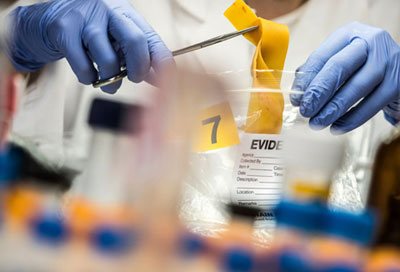
Anticipate, organize, study to react effectively in order to file a complaint by providing evidence to the prosecutor.
In legal expertise, there is always this question that we ask legal experts, is the proof of the identification of a handwriting or a signature absolute?
Does it lead to certainty?
In the criminal trial, doubt always benefits the accused.
The expert's report closes the debates...
Permanently rules out suspicion against the accused...
In civil cases, doubt can never benefit the accused, why...
Develop by bringing your elements for our upgrade...
The expert is always right.
In forensic science
the word expert comes from the Latin (expertus) which has several meanings, thus this word refers to a qualified legal person who carries out an ancillary activity and has proven competence in a specific field. As such, a legal expert is called upon to give his opinion to the judge taking into account his knowledge of the subject matter of the dispute. As such, the legal expert is a collaborator of the judge. He is a specialist in technical issues while the judge is the specialist in rights issues.
The opinion of the legal expert does not bind the judge who retains his intimate conviction.
In forensic science
At a crime scene
The criminal always leaves traces, prints, drops of blood, bullets, products, which, sifted through scientific methods, help experts to reconstruct the course of events and identify the culprits. Documents, letters, computers and telephones whose memory is thought to have been erased have information to deliver.
But how do you find traces at a crime scene?
According to a fundamental principle of criminalistics, known as de Locard, a criminal always leaves traces of himself at the scene of his crime and takes traces of the victim with him. Under these conditions, the crime scene is teeming with clues likely to betray him.
We will search for:
- The projectiles
- Fibers
- Prints, genetic, digital.
- Number of last caller
-DNA of the victim
- Recordings
- etc